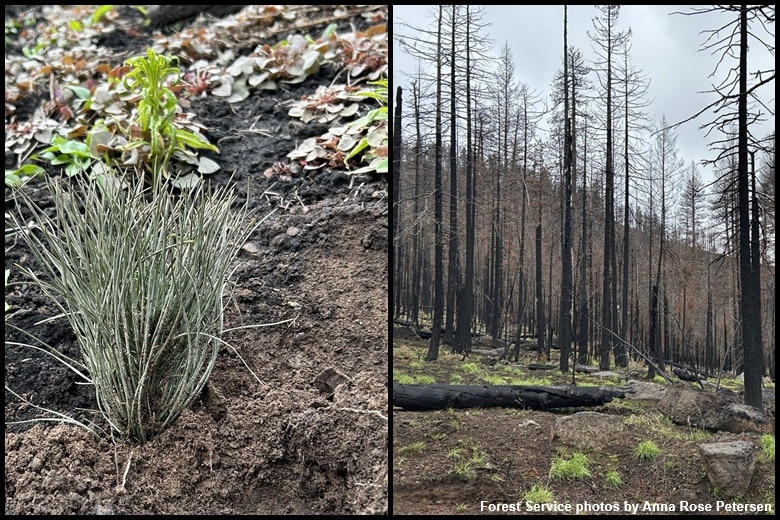
Over 635,000 seedlings planted across Malheur National Forest burn scars
By Logan Bagett on Thursday, July 2nd, 2026 in Eastern/Southeast Oregon News More Top Stories
JOHN DAY, PRAIRIE CITY, & HINES – (Press Release from the Malheur National Forest)
Two years have passed since the 2024 fire season that left more than 300,000 acres burned across the Malheur National Forest. On the Malheur, and across the West, wildfires are becoming more severe, with intense wildfires disrupting or reducing natural tree regeneration in several interconnected ways.
Seed sources are destroyed when fires burn extremely hot. Mature trees that would normally drop seeds after the fire are killed, and fewer surviving seed-producing trees means less natural regeneration across the burned area. Soil structure and nutrients are damaged, leaving landscapes prone to increased erosion and runoff.
Without the ability to rely on natural regeneration, the Falls, Rail Ridge and Sand Fire scars are all large fires that were left with a serious need for re-forestation.
But what does it take to begin re-establishing areas of the forest that experienced high severity wildfires?
Planning and Planting
Reforestation begins with a reliable supply of high‑quality seeds and seedlings, and the USDA Forest Service supports this work through a comprehensive nursery and seed extractor program. This program brings together nurseries, seed orchards, genetic conservation efforts, and the National Seed Laboratory to ensure that federal lands have the right materials for successful replanting, ecosystem restoration, and long‑term biodiversity.
Seedlings have already been started from seed several years prior to the year they’ll be planted and they are ready for the next steps. Seedlings shipment orders get processed, tree coolers start humming, and unit conditions are constantly checked to make sure they are accessible, warm enough, and wet enough to receive seedlings.
When does planting occur?
A key operational consideration in reforestation planning is the timing of planting, as sapling survival is strongly influenced by soil temperature, moisture availability, and physiological dormancy status. Planting is typically scheduled for late winter or early spring because these windows align with periods of minimal plant stress and optimal root establishment conditions.
Reforestation crews move quickly each spring to take advantage of the cooler, wetter conditions that give young seedlings the best chance of surviving the hot, dry summer ahead. Timing is critical: moisture in the soil helps newly planted roots take hold, and lower temperatures reduce stress on the seedlings during their first days in the ground.
Planting days begin before sunrise, when crews load seedlings from refrigerated tree coolers and transport them to their designated planting units. Each day’s work is carefully planned, with teams moving methodically across the landscape from dawn until the afternoon to ensure every seedling is placed correctly and handled with care.
This season, contracted planting crews and Forest Service staff worked side by side in steep, remote terrain across the Blue Mountain and Emigrant Creek Ranger Districts. In just four weeks, they planted more than 635,000 conifer seedlings across nearly 5,000 acres—an intensive effort that will help accelerate forest recovery and support long‑term ecosystem resilience.
It’s necessary to take advantage of the cooler, wetter conditions to allow the seedlings a good start and best chance for survival through the warm summer ahead.
Planting starts very early in the day loading the seedlings from the tree cooler to be transported to the specific planting units. The work is methodically planned from dawn each day until the work is completed in the afternoon.
The early mornings and long days are worth it for many reasons. Every seedling planted this season went into areas burned in the 2024 fires, helping restore forested landscapes that experienced high‑severity fire. Active reforestation remains one of the most effective strategies for restoring the health and resilience of our natural landscapes.
These seedlings represent the future of our forests. As communities continue to experience the effects of server wildfire, habitat loss, and changing natural conditions, targeted reforestation efforts play a critical role in safeguarding ecological stability, supporting local economies, and protecting the natural resources we all rely upon.
Through careful planning, hard work, and perseverance, crews are helping ensure these landscapes can recover, thrive, and continue to benefit communities and ecosystems for generations to come.