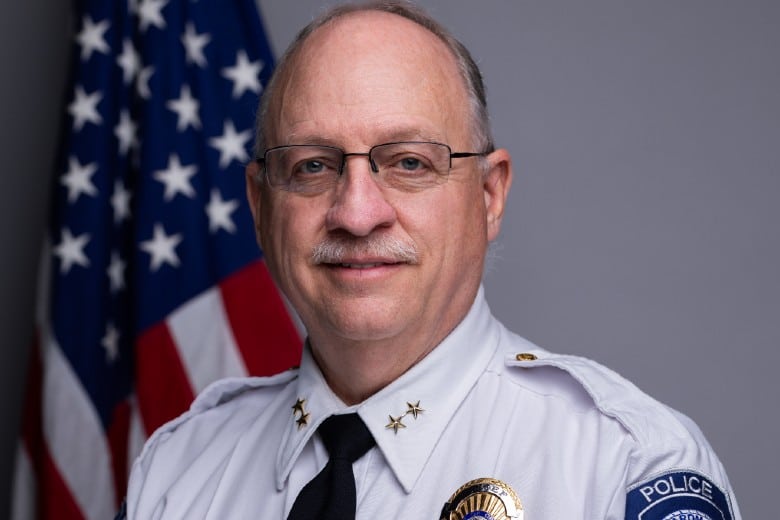
BPD Chief Stokoe stands with Edmiston on jail intake policies
By Terry Murry on Tuesday, November 17th, 2026 in Columbia Basin News More Top Stories
BOARDMAN – Hermiston Police Chief Jason Edmiston is not standing alone in his criticism of jail intake policies that see law enforcement officers having to stand by in hospitals before suspects are cleared to be jailed. Boardman Police Chief Richard Stokoe, who has served as an undersheriff with direct oversight of jail operations, agrees that nothing is being done to allow local officers to return to their beats.
“I understand firsthand the responsibilities, challenges, and requirements involved in operating a correctional facility,” Stokoe said. I also understand the importance of ensuring that individuals are medically fit to be housed in jail. Nobody is asking the jail to compromise someone’s health or safety and that has never been the issue. My concern, and one shared by other law enforcement leaders, is the impact these procedures continue to have on our ability to do our jobs and protect our communities.”
Stokoe said that he respects the responsibilities of the sheriff’s office, but he also believes there needs to be “consistency, accountability, and a willingness to work together to find solutions.”
“If jail medical personnel determine that someone requires additional medical evaluation, we need to have a serious discussion about why the arresting agency is expected to provide transportation, supervision, and potentially bear the associated costs,” Stokoe said. “Other agencies have raised similar issues and despite previous discussions, we continue to face the same challenges.”
Stokoe said that at some point, “we need to move beyond talking about the problem and actually make some changes.”
Further, Stokoe said this is not a new problem. He emailed Umatilla County Sheriff Terry Rowan about it as early as March 2025. His email was never answered. This is what he wrote:
I am reaching out on behalf of law enforcement agencies to address concerns regarding the intake and medical screening procedures outlined in your recent communication. We fully recognize the importance of medical evaluations in ensuring the safety and well-being of everyone entering the jail system. However, we’d like to clarify a few key points to ensure that these procedures support both public safety and the effective enforcement of the law.
Ensuring a Smooth Intake Process
First and foremost, law enforcement officers have a duty to enforce the law, which includes the lawful detention of individuals who have been arrested. Some aspects of the outlined procedures, if not fully understood or applied consistently, could unintentionally create delays or obstacles in processing arrestees. Below are some specific areas of concern and their potential impact on law enforcement operations:
Acceptance of Arrestees into UCJ
Your statement that “arresting deputies and officers should not presume that all arrestees will be accepted into UCJ for lodging” could create uncertainty around custody procedures. While we understand the necessity of medical screenings, the intake process should not lead to undue delays in detaining individuals who have been lawfully arrested. Officers need to be confident that, once an individual is brought into custody, the lodging process will proceed efficiently without unnecessary barriers that could impede law enforcement efforts.
Role of EMTs in Medical Clearance
Your communication states that “EMTs/Ambulance personnel are not considered mid-level providers and do not meet MedTrust’s requirements for medical clearance or refusal for medical care.” While we acknowledge that EMTs may not meet the precise criteria for medical clearance, they play a critical role in assessing an individual’s condition at the scene. Law enforcement officers depend on EMTs’ expertise to make informed decisions regarding transport, and their assessments should be taken into account as part of the intake process. I would also add that in almost all of our jurisdictions its not just EMT’s but Paramedics.
Refusal of Medical Care
We agree that individuals refusing medical care should sign a waiver, but we want to ensure that this requirement does not cause unnecessary delays in processing arrestees. The refusal of medical care should not become a reason to deny detention when an individual has been lawfully arrested. We recommend that individuals who refuse care still be processed into the facility, with proper documentation in place to acknowledge their decision while ensuring their safety.
Managing Urgent Medical Conditions
We understand the importance of medical evaluations, especially in cases of severe intoxication or withdrawal. However, requiring medical clearance before accepting individuals into custody could place an additional burden on law enforcement and delay the detention process. Our officers are trained to handle individuals in these conditions, and we rely on the jail’s medical team to work alongside us to ensure their safe and efficient processing.
Working Together for Public Safety
Our agencies are committed to upholding the law and protecting our community, and we appreciate the vital role UCJ plays in this mission. We ask that intake policies and procedures be reviewed to ensure they support timely and consistent processing of arrestees while still prioritizing health and safety.
Photo of Chief Stokoe provided by Boardman Police Department