110 days, 7 assignments, and a marathon season. The US Forest Service highlights the La Grande Interagency Hotshot Crew
By Garrett Christensen on Thursday, November 12th, 2026 in More Top Stories Northeastern Oregon News
LA GRANDE – Though the 2026 fire season may seem increasingly distant, the sheer amount of disruption brought to the Pacific Northwest this year, and the titanic effort put in by local crews to keep communities safe, cannot be understated. From traveling for weeks across the region to putting in thousands of hours of hard work in the toughest conditions, the 2026 season certainly left an impression on Oregon’s fire crews.
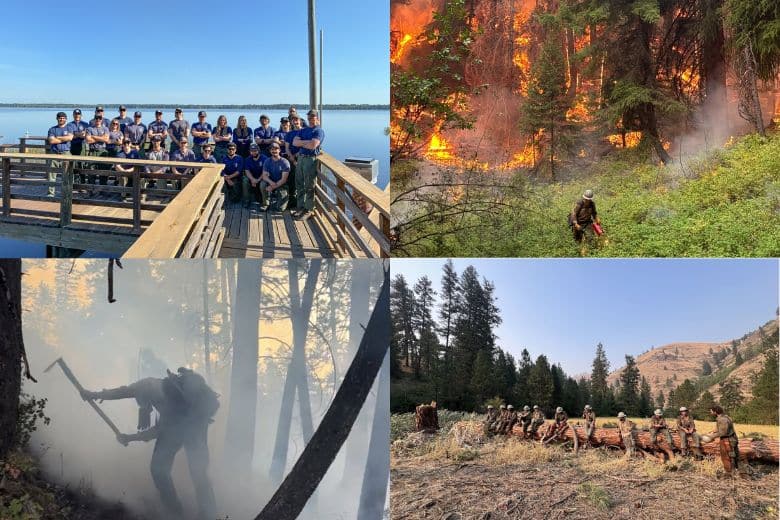
Highlighting just what it took to keep up with the demands of this year’s fire season, the U.S. Forest Service Wallowa Whitman National Forest recently shared an extensive season highlight, including a breakdown of major assignments, for the La Grande Interagency Hotshot Crew. For anyone curious as to what their local USFS Wildland firefighters got up to this year, see the breakdown from Wallowa Whitman below:
(Release from the U.S. Forest Service)
Crew History
Established in 1967, La Grande Interagency Hotshot Crew (LGIHC) traces its roots to the Wallowa-Whitman Interregional Crew, originally based out of Sled Springs Guard Station. In 1980, the decision was made to divide the interregional crew’s overhead and establish two National Interagency Hotshot Crews, giving rise to La Grande and Union Interagency Hotshot Crews.
Throughout its history, LGIHC has maintained a reputation for hard work, professionalism, and providing a high level of service to the public and cooperating agencies. We are a diverse team of highly skilled and motivated wildland firefighters committed to performing our work safely and effectively. We take pride in the service we provide, approach each assignment with a positive attitude, and continually strive for excellence.
2026 Season Overview
The 2026 season brought significant opportunities for growth and development within LGIHC. Five crew members were promoted into key leadership positions, while several new faces joined the team. Although the crew entered the season with less seasoned hotshot experience than in previous years, members quickly adapted and overcame the challenges through hard work, teamwork, and a commitment to learning.
One of the greatest strengths of a hotshot crew is the experience gained through repetition. From morning vehicle inspections to adapting operational plans during complex burn operations, familiarity and experience allow crews to work efficiently and safely. This season provided an opportunity for our team to build on that experience while continuing to meet the demands of a busy fire season.
Our season began in early April and concluded in early October. Throughout that time, we experienced long shifts, extreme heat, physically and mentally demanding assignments, and extended periods away from family and friends. In total, the crew spent 103 days assigned to fires and 110 days away from home, completing seven assignments across multiple states.
A typical assignment involves receiving an incident briefing, traveling to an assigned division, and conducting additional operational briefings and reconnaissance. Depending on the complexity of the terrain and fire environment, scouting can take anywhere from several hours to multiple days. Before beginning operations, the crew establishes a medical plan, escape routes, safety zones, and an overall operational strategy. Once these elements are in place, the crew goes to work.
2026 Fire Season Assignments
Assignment 1 – Virginia and Florida
The season began with a severity assignment to Virginia in anticipation of elevated fire danger and expected red-flag conditions. After a four-day drive, the crew assisted with prescribed fire, fuels reduction projects, and an initial attack incident, using chainsaws and leaf blowers to help contain the fire.
The crew was subsequently reassigned to the Gun Range Fire near Lake City, Florida, where members constructed direct fireline, completed mop-up operations, and remained prepositioned for the remainder of the assignment. The deployment also gave several crew members the opportunity to visit states they had never previously traveled to.
Following the assignment, the crew returned to La Grande and spent approximately a month supporting the local district with initial attack operations.
Assignment 2 – Washington and Oregon
The crew began its second assignment on the Juniper Dunes Fire north of Pasco, Washington. Operations included securing several miles of fireline and conducting burn operations in temperatures exceeding 100 degrees.
The crew was then reassigned to the Old Emigrant Fire near Pendleton, Oregon, where members constructed direct fireline and eventually tied in with line built by Union IHC.
This seven-day assignment marked the beginning of several physically demanding deployments. With no scheduled rest and recuperation days, the crew continued to adapt to the demands of a busy season.
Assignment 3 – Idaho
After one day off, LGIHC was dispatched to the Shingle Creek Fire near Riggins, Idaho. The crew worked in steep, rugged terrain above the Salmon River, constructing direct fireline over several shifts before meeting crews advancing from the opposite side of the fire.
One of those crews was led by a superintendent who had previously spent five years on LGIHC, highlighting the lasting relationships and connections within the hotshot community.
The crew spent the remainder of the assignment mopping up and securing the fire.
Assignment 4 – Northeast Oregon
The fourth assignment kept the crew close to home. LGIHC was dispatched to the Anthony Fire near North Powder, Oregon, where members constructed direct fireline, provided Heavy Equipment Bosses, conducted burn operations, and secured the fire’s edge. These efforts helped prevent fire progression toward Anthony Lakes Ski Resort.
The crew was subsequently reassigned to the Burnt Creek Fire near Enterprise, Oregon. Working in Joseph Canyon, members encountered extreme conditions, with temperatures in the mid-to-upper 90s and difficult access throughout much of the fire.
The crew constructed direct fireline through creek bottoms with heavy fuel loading. Steep terrain, high temperatures, and demanding workloads made daily operations particularly challenging, with hikes out of the fire area taking nearly two hours.
Assignment 5 – Hells Canyon, Oregon
The crew’s fifth assignment took them to the Bob Creek Fire near Oxbow, Oregon, in Hells Canyon. Working alongside local resources and Grande Ronde Rappellers, LGIHC was flown into a portion of the remote fire to locate and address hotspots in steep, difficult-to-access terrain.
After several shifts, the crew moved to the Fox Fire, where members worked alongside fixed-wing and rotor-wing aircraft while constructing direct fireline.
The two week assignment concluded on the Rowe Creek Fire. Due to extreme daytime fire behavior, crews shifted to nighttime operations when conditions were more favorable. LGIHC spent time scouting ahead of operations and conducting burn operations to address unburned pockets within the fire perimeter.
Assignment 6 – Sinlahekin Fire, Washington
The sixth assignment brought LGIHC to the Sinlahekin Fire near Tonasket, Washington. Over two weeks, the crew scouted an entire division, constructed direct fireline, conducted burn operations, supported operational planning, and provided Heavy Equipment Bosses.
Operations took place in remote areas along the western side of the fire. To improve access and maximize time on the fireline, the crew established a spike camp on a ridge within the Loomis State Forest and utilized helicopter transport.
Assignment 7 – Sinlahekin Fire, Washington
For its final assignment of the season, LGIHC returned to the Sinlahekin Fire for an second deployment. With fire activity winding down, the crew focused primarily on scouting remote portions of the fire perimeter to determine what additional work was necessary.
Members secured sections of fireline and completed tree-felling projects to reduce potential hazards and lessen impacts to public roads.
Training and Qualifications
Professional development remained an important part of the 2026 season. Crew members continued advancing their qualifications and gaining valuable experience in leadership and operational positions.
The crew completed the following taskbooks:
- 1 – Division Supervisor
- 1 – Prescribed Fire Burn Boss Type 2
- 1 – Incident Commander Type 4
- 1 – Crewboss
- 1 – Engine Boss
- 2 – Incident Commander Type 5
- 3 – Firefighter Type 1
Looking Ahead
The 2026 season challenged LGIHC in many ways. New leadership, developing experience, demanding assignments, and extended time away from home strengthened the crew’s ability to adapt and work together. Through those challenges, our members demonstrated resilience, professionalism, and a continued commitment to the mission.
We are proud of the work accomplished this season and grateful for the support of our families, cooperating agencies, and the communities we serve. Every assignment provided an opportunity to learn, develop, and strengthen our crew.
As we look toward future seasons, we remain committed to the traditions that have defined La Grande Interagency Hotshot Crew for decades: hard work, teamwork, safety, and excellence in service
**
(Photos from the U.S. Forest Service Wallowa Whitman National Forest)