City of Union terminates city manager as residents demand action from the council against squatters
By Garrett Christensen on Thursday, July 30th, 2026 in Northeastern Oregon News Northeastern Oregon Top Stories
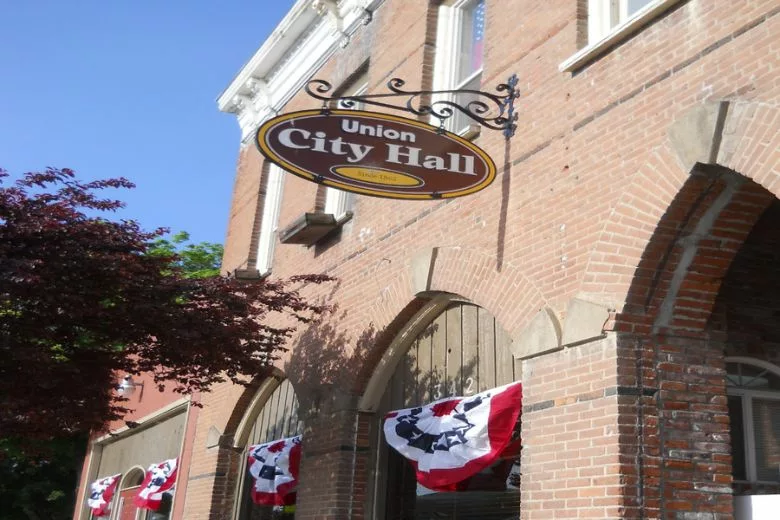
UNION – Tensions flared Monday night during a special session of the Union City Council. Then current Union City Manager Jared Cole saw his contract terminated, while a crowd of frustrated residents, along with Union County’s own sheriff, made their feelings known about the council’s perceived shortcomings, particularly with addressing the ongoing squatter issue.
Going through the proceedings, within the opening minutes of the city council meeting, after councilors had concluded the opening work session, current city manager Jared Cole was terminated. Councilor Anita Boyer-Davis requested a new item be added to the beginning of the agenda to terminate Cole’s contract without cause on a 30-day notice.
This item was promptly added and unanimously approved by the council and mayor, effectively ending Cole’s employment with the city, though he remained to oversee the duration of the meeting. The council would comment that this was not personal, but that Cole was simply not a good fit for the position.
Following the sudden termination of the city manager, the council would run through several administrative matters, including:
- 2.1 Resolution 2026-09 Debit Card Usage
- 2.2 Resolution 2026-10 Administrative Parameters and Guidelines
- 2.3 Resolution 2026-11 Land Use Permit Fee Schedule Update
- 2.4 IT: New Contractor Contract Discussion/Approval
- 2.5 GOV Domain and DNS Hosting Discussion/Approval
- 2.6 New Website Discussion/Approval
- 2.7 Online Payment Portal and Physical Merchant Services
- 2.8 Resolution 2026-12 Election to Receive State Revenues
During these items, some discussion was held regarding transitioning the city to Express Bill Pay, similar to La Grande and Joseph, with the council also approving transition OF the city’s website to a new domain in 3-2 vote.
However, drama ensued once more when the floor was opened to public comment. The focal point of the feedback that night was the ongoing squatter and public safety situation, and the perceived failure of the council to meet the needs and concerns of residents.
For those unfamiliar with the situation, over the past several years, the City of Union has seen a growing number of squatters and transient residents move into the area, bringing with them (according to accounts from residents) illicit substances, garbage, and unregistered (and by all testimony non-street legal) RVs and other vehicles, among other things.
For some time, these squatters were primarily concentrated in and around 865 North Second Street, a property stuck in legal limbo following the passing of its final owner and subsequent foreclosure due to back taxes. The property also suffered a fire on September 11, 2025, and was, briefly, listed as a local drug den on Google Maps.
Though the North Second Street property has since changed hands, residents now report that squatters and transients are concentrated around a series of properties near the intersection of West Arch Street and North Fifth Street. According to testimony from Union residents, these current transients have continued to be both disruptive and dangerous. Specific complaints from residents brought forward during the meeting include, but are not limited to:
- Transient vehicles without tags being parked/abandoned for long periods of time.
- Transient motorhomes/campers being parked around town and left on private property.
- Numerous loud/disruptive dogs barking constantly and threatening Union residents on their own property.
- Transients running chainsaws/power equipment in the late afternoon despite noise complaints and burn bans. (One union resident claimed the individuals were clearing tree branches to make space for more motorhomes/campers).
- Phallic images spraypainted on buildings currently occupied by transient residents.
- Buildup of garbage/trash and broken-down vehicles on the impacted properties.
- Strange noises and smells emanating from the impact properties.
- Extreme fire hazard on the impacted properties threatening nearby homes due to a careless buildup of garbage and vegetation.
- Drugs/illegal substances brought in by transients
- Frequent trespassing on other properties from transients.
- Impacts to insurance rates and property values caused by the poor conditions of the transient properties and the buildup of garbage.
- Lack of enforcement for city ordinances by city staff against transient properties
- Frequently need to call law enforcement due to disrupting activities and trespassing.
- Chronic inaction from the city’s legal counsel and a perceived failure by the city to demand action from the legal council.
The fire issue in particular has been a major concern for some time. As mentioned, the previous squatter property on North Second Street was largely destroyed in a fire. During the meeting, one resident, Kris Grubb, told the council her property suffered around 10-thousand-dollars in damages last year from a fire that occurred on an adjacent West Arch property occupied by squatters.
Another resident, Lesly McMillian, claimed she’s been unable to sleep for weeks due to the barking dogs, and the Union County Sheriff’s Office has been frequently called about the property. Most residents who spoke harshly questioned why the transients/squatters can continue to violate city ordinances and why the city has not taken decisive action, despite the properties being known issues.
As for what has been done by law enforcement, Union County Sheriff Cody Bowen noted his department has trespassed numerous transient residents off private property, including the city church, and warned them that any future trespassing will result in an immediate arrest and their vehicles towed. Deputy Butcher also investigated around 4-5 locations throughout the city that were reported as areas of concern, though all ended up being ordinance issues.
According to Bowen, the crux of the issues is that many of the actions of transients are city ordinances violations and not explicitly criminal. Per UCSO’s contract with the city, the Sheriff’s Office cannot spend resources enforcing city ordinances, as they would legally be required to for all cities, which is beyond the department’s capacity and funding. Currently, both UCSO and the City of Union lack a dedicated ordinance enforcement officer. Bowen suggested to the council that the Cities of Union and Elgin could possibly jointly fund a UCSO ordinance officer’s position (50k from each city) to explicitly enforce local city ordinances.
Beyond that, Bowne noted UCSO is helping in other ways within their jurisdiction, such as placing notices on vehicles and stepping in when criminal actions do occur. One resident adamantly insisted that the UCSO could deputize residents to serve as volunteer ordinances officers, though Bowen polity but firmly declined this proposition due to the extreme legal liability involved and associated training costs.
Later in the meeting, Bowen would encourage residents to increasingly scrutinize any future mayoral and council candidates and demand further transparency from the current council. Bowen even commented that Cole represents the 4th Union City admin since he’d been elected, and that a previous council member was found to be paid with city funds to conduct janitorial work for the city without proper disclosure.
Concluding the public’s general thoughts on the situation during the meeting, the final resident to give public comment would describe the council as “feckless” and a “self-licking ice cream cone.”
Near the conclusion of the meeting, the council made a motion to establish a Union Safety Committee and invited all members of the public to potentially join. This committee will be discussed further during the Monday, August 3rd city council meeting at 7:00 p.m.
Elkhorn Media Group did briefly speak with Union Mayor Susan Hawkins at the conclusion of the meeting, who remarked that residents are fully within their right to complain about the very real problems they’re facing, and the current situation is complicated. Hawkins noted she would prefer to speak with the city’s legal counsel first before giving a more extensive formal statement on behalf of the council.