A life ended every 15 minutes. Imbler student Madeline Burright highlights the horrors of drunk driving
By Garrett Christensen on Monday, May 11th, 2026 in More Top Stories Northeastern Oregon News
IMBLER – Any message, when repeated enough times in the absence of tangible consequences, can become dangerously routine. Warnings to youth about the risks of drugs and alcohol, unfortunately, fall within this category, as common advice and statistics morph into nothing more than distant noise in the moment.
When it comes to drunk driving in particular (be it driving yourself or riding with someone who is drunk), the true weight of such a mistake often doesn’t become apparent until tragedy strikes. For her senior project, Imbler junior Madeline Burright went above and beyond to demonstrate the unfiltered emotional and physical horror of drunk driving to her peers, with any luck saving future lives in the process.
Burright’s method for the project involved an adaptation of the 15 Minute Program, named so as, at the time it was created, someone statistically died in the United States every 15 minutes from drunk driving accidents. Though this statistic has decreased to a death every 38-42 minutes on average thanks to continued awareness and prevention, the number of lives lost every year remains tragically high.
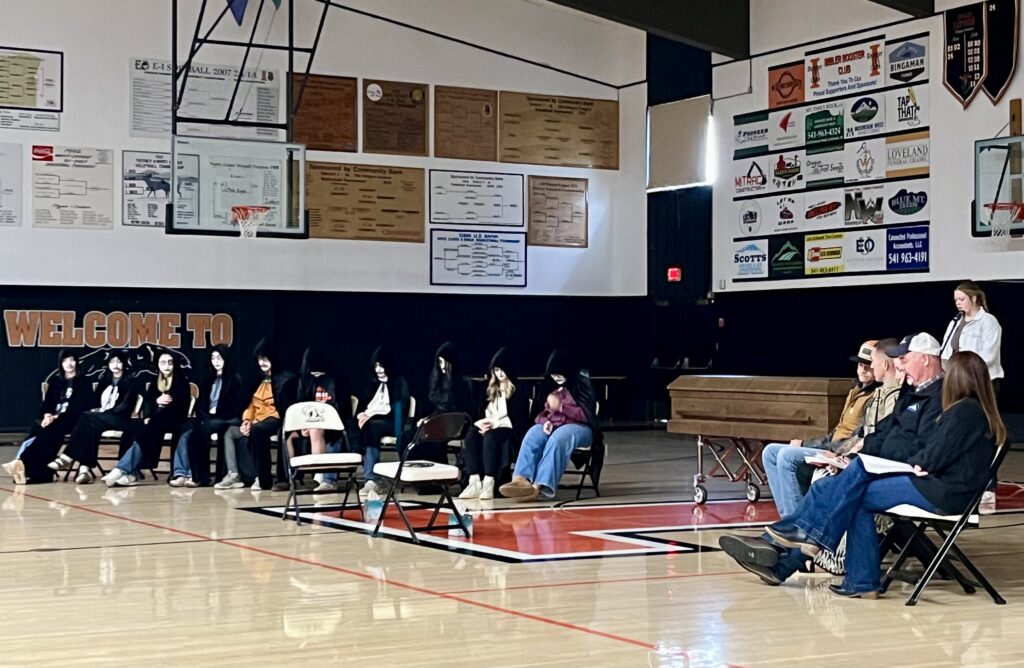
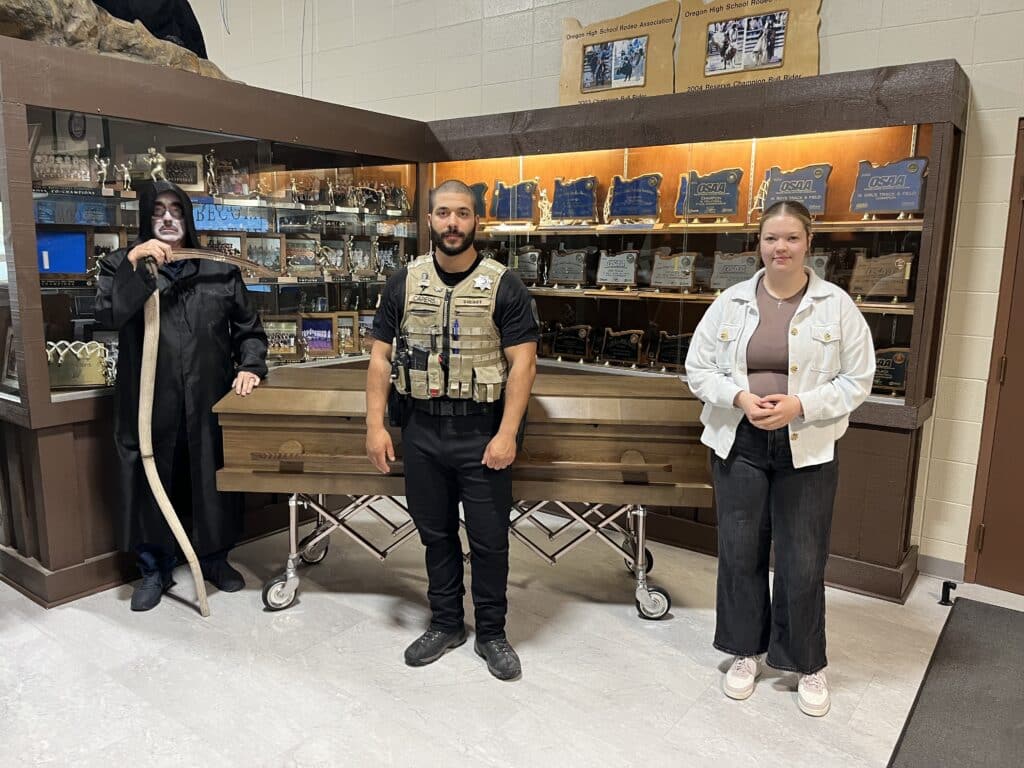
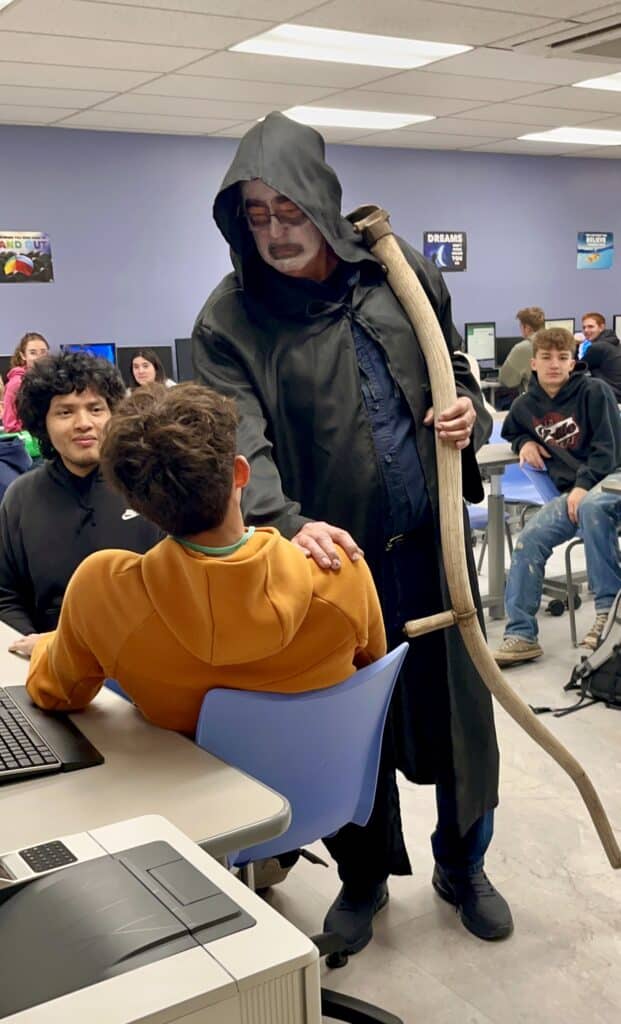
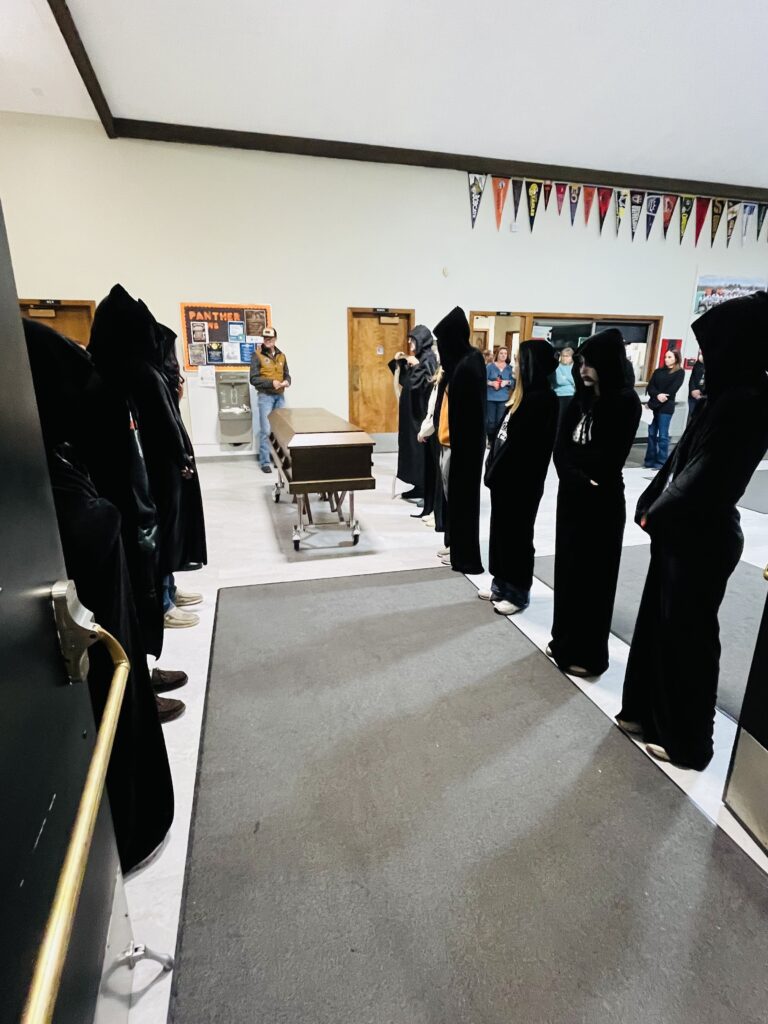
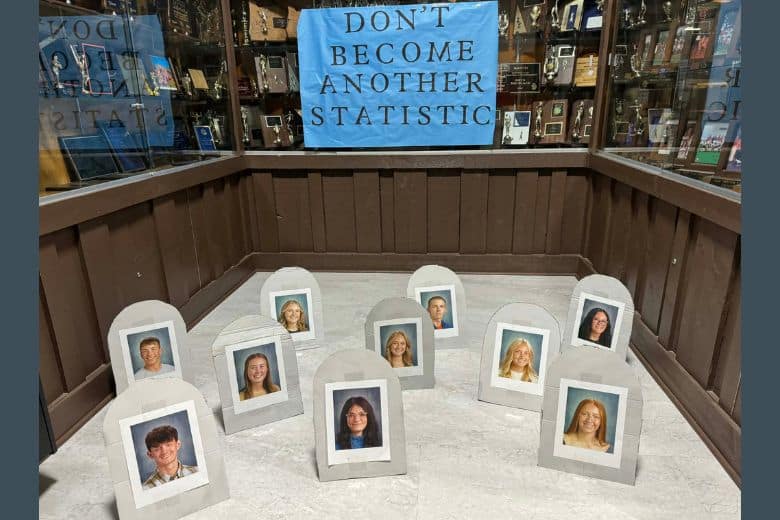
As to how the project worked, on April 15, 2026, Imbler students were witness to a series of somber and realistic intercom announcements throughout the morning, each one describing the (simulated) tragic death of one of their classmates in a drunk driving accident. The dead students (unaware of their own demise) were pulled out of class, dressed and face painted as a grim reaper, before silently continuing throughout the day as a “living dead.”
That afternoon, Burright gave a presentation to most of the school, including local speakers Kevin Loveland with Loveland Funeral Chapel, Sergeant Hernandez from the Union County Sheriff’s Office, and former Imbler teacher Becky Wilson. For Wilson in particular, her own daughter passed away some years ago, killed in a wreck when she road home with a friend who’d been drinking. Loveland similarly lost a close friend (someone he’d gone Mortician to school with) who chose to drink and drive, serving as the tragic inspiration for the Loveland Safe Ride Program.
During the presentation, obituaries for the living dead students, written by their own parents, were also read aloud. As explained by Burright:
“The parents were asked to write an obituary for their students, as well as a letter to them with the prompt of, ‘today you died in a drunk or distracted driving accident, and I never had the chance to tell you…’ and so on.”
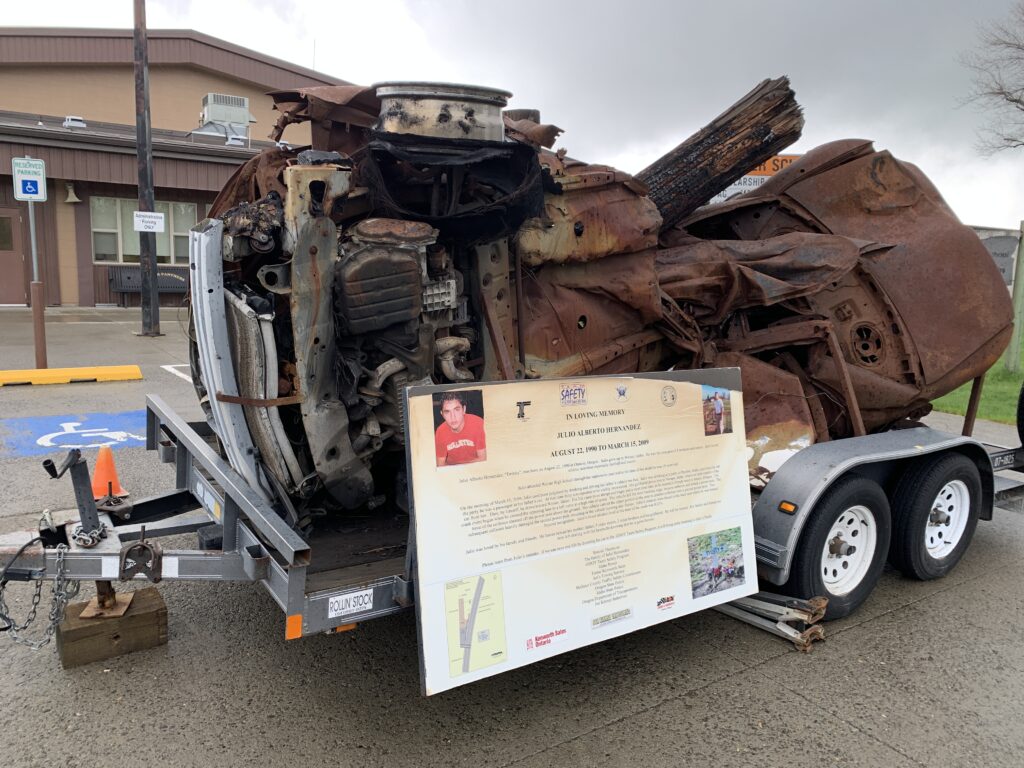
Alongside the presentation inside the school, a familiar, if not infamous, bit of wreckage was also present outside. The twisted, mangled remains of Julio Alberto Hernandez’ car sat soberingly on display out front of the high school. For those unfamiliar with the story, Hernandez (18 at the time of his death) perished in a catastrophic drunk driving accident while traveling solo toward Weiser Idaho after a party. As written on the plaque accompanying the wreckage:
“The crash event began when he crossed the opposing lane in a left curve at a high rate of speed. The vehicle left the roadway edge, became airborne and struck a power pole. The force of the collision sheared off the power pole above the ground. His vehicle carried the upper portions of the pole to another collision with a second power pole. This subsequent collision heavily damaged the second power pole, resulting in the vehicle bursting into flames. Julio’s remains were found in the back seat where he was burned beyond recognition. Julio’s blood alcohol level at the time of the crash was 0.21%”
On their own, Hernandez’ death, along with the incidents discussed by the guest speakers, could easily be reduced to just statistics on a police report or an ODOT safety flyer. It’s not until the emotional and physical impacts of such tragedies are shown in person and unfiltered that the true ramifications of drunk driving can be rationalized. As discussed by Burright:
“I hope that the one thing people take away is that they heard who spoke up there, and they heard how horrible those stories are, and how it can affect you. I hope that they gain the thought of things like, ‘my friend has been drinking, I’m not going to let them drive.’ Just making sure that they are not partaking in any drinking, and driving, or looking at their phone while driving, because now they’ve seen how that can affect somebody’s life, and so I hope that they can take that away, and just say no.”
Based on the reaction from students after the assembly, it seems the shock value may have worked. As Burright further elaborated:
“I was definitely surprised. I mean, I’m a high school student, I know how some of these things can happen. A lot of times we mask feelings and stuff with laughter or being funny or something, but it was really nice because multiple students came up after and hugged me and said ‘that was amazing.’ I hate it, but seeing the students crying and really feeling that, it gave a lot of clarity that this project did have an impact.”
Time will tell if the students truly took the horrors to heart, of course. In the meantime, Burright’s project has wrapped up, with a final presentation and reflections due during her senior year. Burright herself remarked that she’ll be going into radiology after high school, and while drunk driving awareness and advocacy isn’t in her future plans, she maintains a strong passion for helping others.
**
(Photos provided by Katie Burright)