Keeping golf accessible in Wallowa Valley: inside the mission to preserve Alpine Meadows
By Tracy Christopher on Tuesday, April 21st, 2026 in More Top Stories Northeastern Oregon News
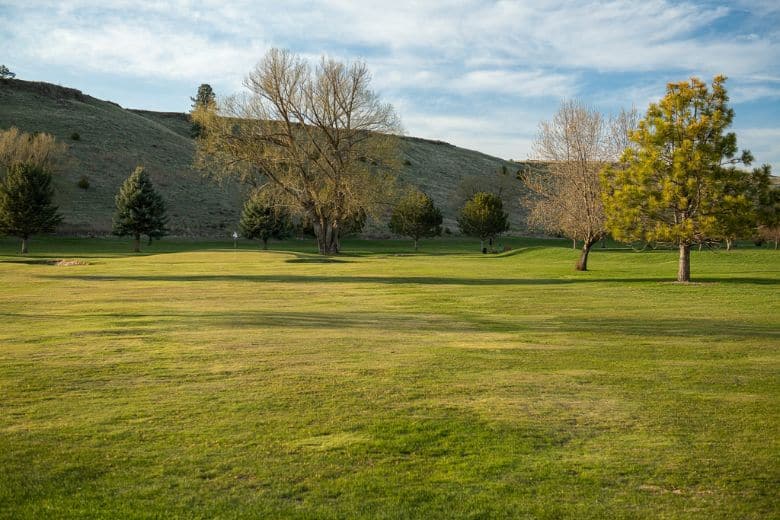
ENTERPRISE — Since 1917, Alpine Meadows Golf Course has been a quiet constant in Wallowa County life — a place where generations have learned the game, families spend long summer evenings together, and visitors from across the West discover just how beautiful golf can be in the Wallowa Valley.
What’s less visible is how close this community asset is to being stretched beyond its limits, and how a small group of volunteers is working to keep it alive.
A Public Course, Not a Country Club
Ask around town and you’ll still hear people assume Alpine Meadows is an exclusive country club. In reality, it’s a public course with modest fees, run on a budget that “barely” covers day-to-day operations.
The course runs as a 501(c)(4) organization — a structure that lets it serve the public but makes it largely ineligible for many foundation and government grants. To bridge that gap, local volunteers formed the Wallowa Valley Golf Foundation, a 501(c)(3) nonprofit that can accept tax-deductible donations and apply for grants on behalf of the course and its programs.
Alpine Meadows Golf Association Memberships sit at just over 300 — enough to scrape by, not enough to fund the long list of repairs and upgrades that a 9-hole course and aging clubhouse require.
“It really just pays for operations — barely,” one Foundation member explained. “The big projects are where we need help.”
A Clubhouse in Need of Care
Walk around the clubhouse and the needs are easy to spot.
An outside stairway up to the balcony has weathered badly in the valley’s long winters. Paint is peeling, boards are at risk of failing, and the patio and cement pad at the end of the building are cracked and need replacement. Inside, a narrow interior stairway makes the upstairs space less accessible and limits how it can be used for events.
The clubhouse does host graduation parties, weddings, and other gatherings during the season, but it’s closed in the off-season and far from the kind of fully accessible community venue many imagine when they hear the word “clubhouse.”
Behind the scenes, the irrigation system and other infrastructure are aging as well.
“Our clubhouse, our irrigation system — it all needs to be updated,” a board member noted. “It’s crumbling. And you’ve got to keep those things up or you won’t get the golfers.”
Why Preserving the Course Matters
For some, golf is just a game. In Wallowa County, it’s also tradition, tourism, and community identity.
The High Country Rat Race, held on Labor Day weekend since 1953, is one of the region’s signature events. Golfers come from Utah, Washington, Oregon, Colorado and beyond, turning the long weekend into an annual reunion. Many arrive Friday for practice rounds, play all day Saturday and Sunday, and stay for awards and social time.
Other tournaments — the Elks tournament, the Helping Hearts event, the firefighters’ tournament, and the ladies’ tournament — bring in players from around the region. Even when some participants are part-time residents or already tied to the area, they still eat in local restaurants, buy fuel, and stay in local lodging.
“They have to eat something during the day,” one attendee pointed out. “Those events are quietly important for local businesses.”
It’s exactly the sort of tourism-driven activity that transient lodging tax (TLT/TRT) and local tourism funds are designed to support, and Foundation leaders are exploring how to better document their impact and tap into those funding streams.
Investing in Youth, Not Just Fairways
If the clubhouse and irrigation system are the visible needs, the youth program is the hopeful counterbalance — proof of what’s possible when the community invests in the course.
Last year, the Foundation sponsored a youth golf camp and an etiquette class that turned heads precisely because it seemed so old-fashioned and so necessary at the same time.
- Around 36–37 kids attended the etiquette session.
- About 24–25 participated in the four-day camp.
- Kids who completed the program earned a free summer pass, and those 13 and under who pass the etiquette course can play for free when accompanied by an adult.
Throughout July and August, the course pro hosted Thursday mini-tournaments, pairing kids in twos and letting them test their new skills on the course. The goal now is to expand to two camps — a beginner camp and an advanced camp — as last year’s participants continue to improve.
“One of our goals is to increase youth participation,” the Foundation shared. “If the kids want to go, the parents are going to go. It becomes something they do together.”
The program has already attracted local partners. Building Healthy Families has signed on as a partner organization, and the Foundation is exploring youth and alternate-activity grants that align with regional efforts to promote positive, substance-free activities for kids.
Creative Fundraising and Community Partners
To keep these efforts going — and tackle the looming infrastructure needs — the Foundation is getting creative.
- The Foundation made a formal presentation to the Wallowa County Commissioners and was awarded $3,000 to use toward some of the existing repairs.
- A Kickoff Dinner on May 16 invites the community to “keep the legacy alive,” with guests encouraged to dress in vintage golf attire. The event will feature an auction (live or silent) to raise funds for the Foundation’s work.
- Last summer, Foundation youth volunteers staffed the first tee at tournaments: for $10, golfers who landed their ball on the green at the first hole earned a sleeve of balls. The effort raised over $1,000 for the youth program.
- This year, organizers are looking at additional ideas — from high school golfers hitting tee shots in scrambles for donations, to breakfasts and on-course contests during tournaments.
On the back end, the Foundation is setting up Zeffy for online registration, allowing people to sign up for events like the kickoff dinner and, they hope, the Elks tournament without added fees to the nonprofit.
Chasing Grants in a Competitive Landscape
Like many small rural nonprofits, the Foundation is learning the grant world in real time.
They have an Oregon Community Foundation (OCF) spring grant pending for operating support (up to $25,000). A separate application through a Wallowa business entity could bring in up to $10,000 if approved. Past applications to Wildhorse and other funds have been denied, but some funders — including a regional healthcare-related foundation tied to the sale of St. Joseph Hospital — have encouraged the group to reapply.
Looking Ahead
The volunteers behind the Wallowa Valley Golf Foundation don’t pretend to have all the answers. They describe themselves as “newbies” in the golf foundation world, even as they draw on experience from other local efforts like the Healthcare Foundation and Helping Hearts.
What they do have is a clear sense of what’s at stake.
Without investment, boards rot, irrigation fails, and tournaments disappear from the calendar. With support, Alpine Meadows can remain what it has quietly been for decades: a place where kids learn confidence and courtesy, out-of-towners discover Wallowa County, and locals remember just how lucky they are to live here — even on the hard days.
For now, the work continues: planning events, chasing grants, tightening up social media and outreach, and inviting anyone who cares about youth, health, and rural community life to take a closer look at a “little bitty circle” on Oregon’s golf map that matters more than its size suggests.
**
(Image originally posted by the Wallowa Valley Golf Foundation)